


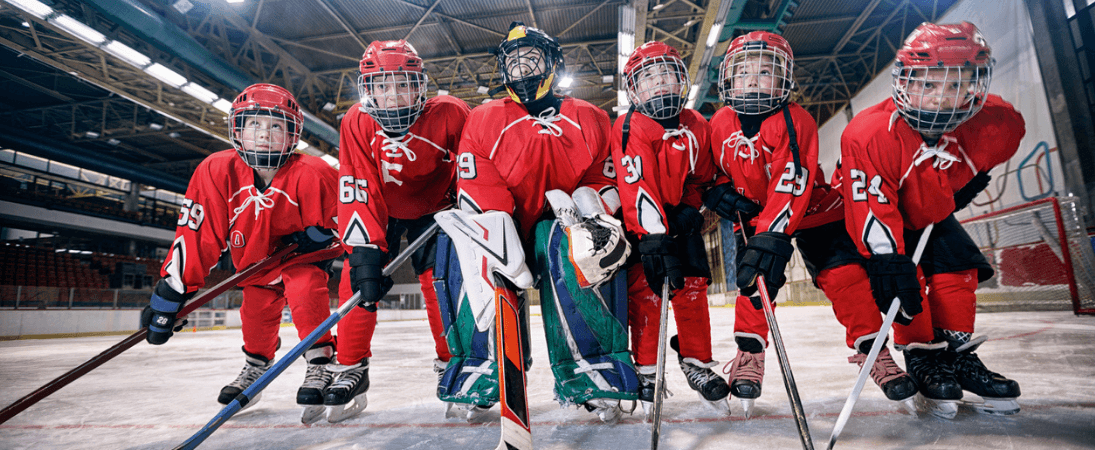
Between ice time, equipment, travel tournaments, and league fees, youth hockey has a reputation as one of the most expensive sports for families.
To find out what families are actually spending, FlipGive teamed up with Scotiabank in 2019 to survey more than 1,000 hockey parents across North America and answer a simple question: what does this sport really cost families? We also asked about time investment, stress, and motivation to uncover why Canadian families remain committed despite the high costs. Here's what we found.
New parents spend the most
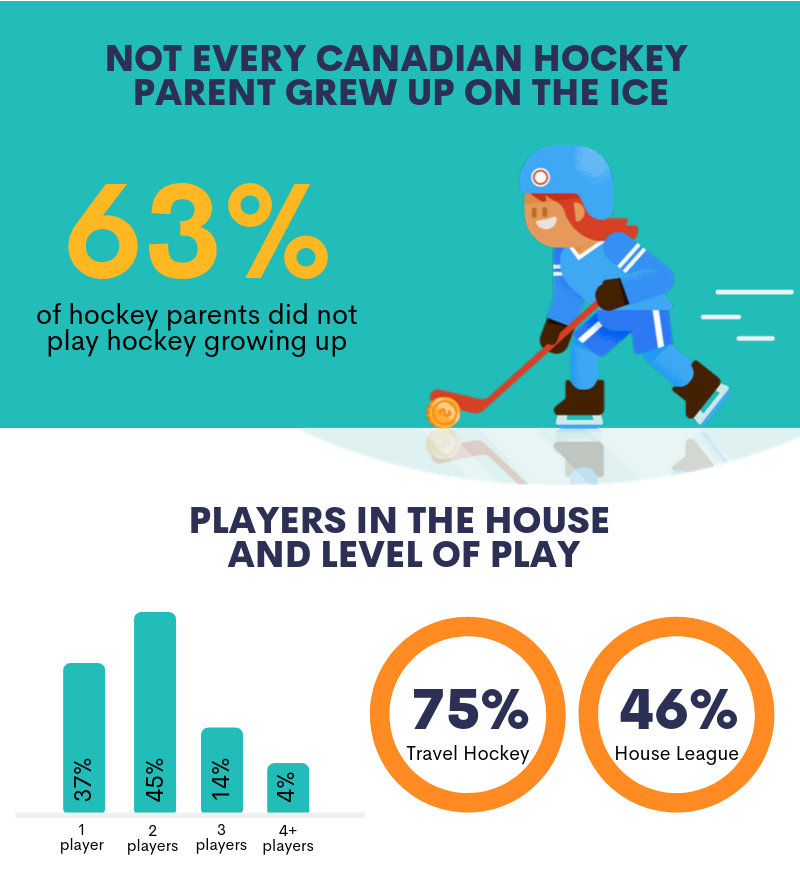
The ones spending the most aren't hockey veterans—they're newcomers who make up about 63% of hockey parents today. Canadian parents who didn't play the sport growing up are more likely to put their kids in competitive leagues, log more ice time, and stretch the season longer than parents who grew up in the game. Survey results show that:
- 62% of newcomer parents spend more than $5,000 a year, compared to 50% of parents who played as kids
- 79% believe hockey can lead to a college scholarship, versus 73% of former players
- 26% have taken a second job to fund the season, versus 21%
Vacations are on the chopping block
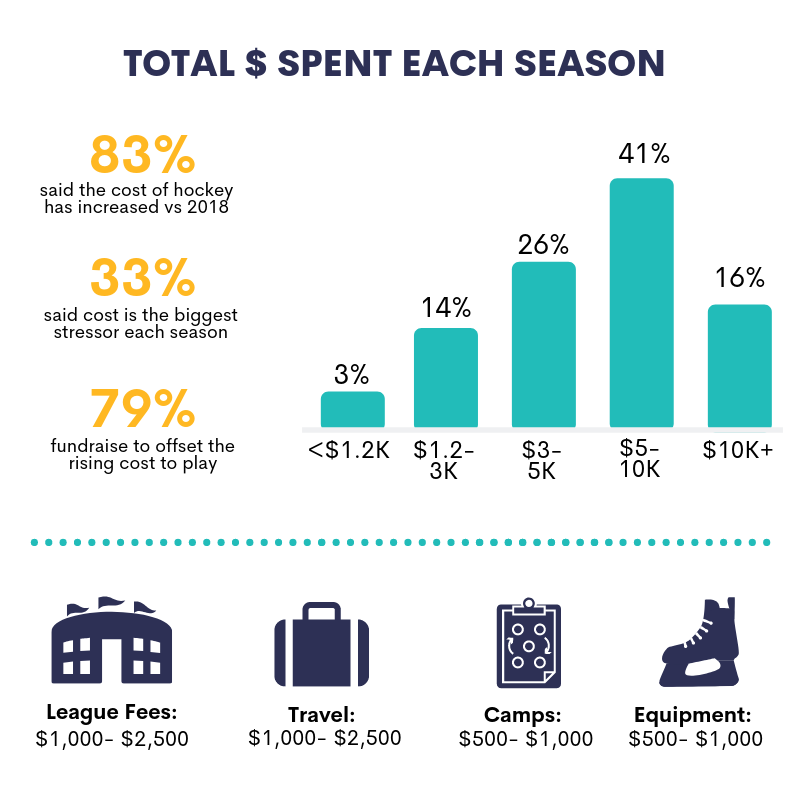
While over 60% of hockey parents spend more than $5,000 a year on the sport, nearly 16% spend over $10,000. And, 83% say costs continue to rise each year.
By category, here's what Canadian hockey parents are spending on:
- League fees: 31% spend $1,000–$2,500 annually
- Travel: 39% spend $1,000–$2,500
- Camps: 34% spend $500–$1,000
- Equipment: 47% spend $500–$1,000
- Private lessons: 48% spend nothing; 28% spend under $500
- Group lessons: 47% spend under $500
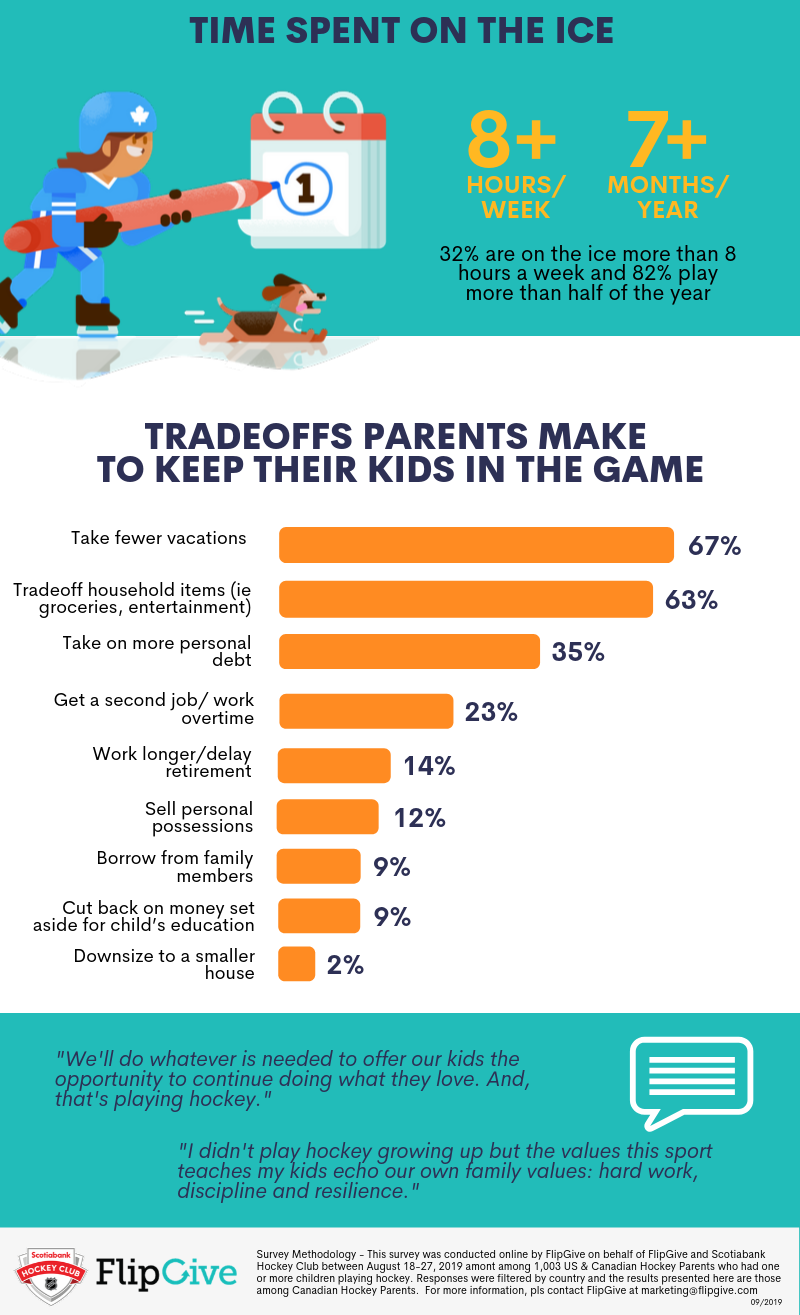
To cover these expenses, families cut elsewhere: 67% take fewer vacations, 63% cut other household spending, 35% take on personal debt, and 23% pick up a second job or work overtime.
Fundraising isn't optional anymore
Cutting back only goes so far, though. For most families, fundraising is necessary to close the gap—79% of Canadian parents fundraise to help cover costs, and for 61%, their team or league requires it.
Additionally, nearly one in five parents (18%) expect fundraising to cover at least a quarter of what they spend. For a family spending the national average of $5,000 a year, that's $1,250 to $2,500 they're counting on raising (not earning or saving).
For some, time costs more than money
Money aside, parents are also paying for youth hockey in other ways.
Nearly 70% of kids play more than seven months a year, and for 75% of them, hockey isn't their only sport. That means parents are putting in serious hours, too. Almost 80% spend five or more hours a week at practices, games, and tournaments. For roughly one in five parents, that time commitment (not the cost) is a major source of stress.
Parents are all in, despite everything
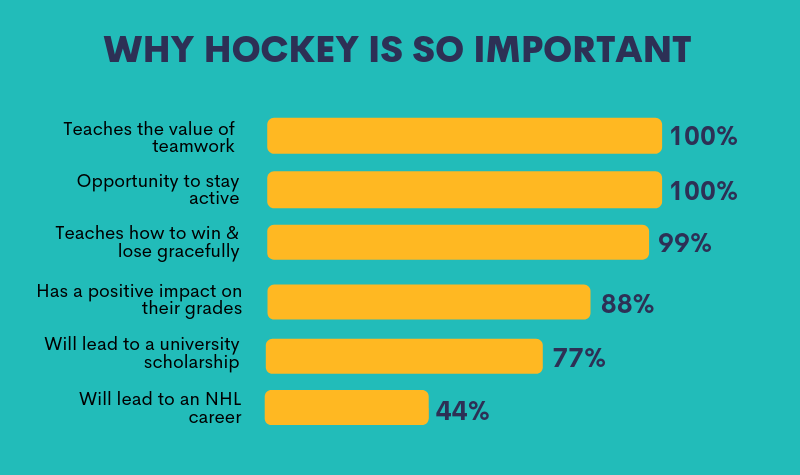
For all the money and time it takes (thousands of dollars and dozens to hundreds of hours), most parents don't regret investing in youth hockey for their kids. Nearly 88% of Canadian parents say hockey has a positive effect on their child's academics, and 77% say they're hopeful but realistic about a college scholarship, even though they know the odds are slim.
Hockey costs families more money and more time than most youth sports, but parents keep signing up anyway, noting that life skills and development outweighs the price.
Is there anything families can do to push back on the costs?
Most of the coping strategies parents use (skipping vacations, trimming the grocery budget, taking on debt or extra shifts) come at a cost of their own. They ease the hockey budget by straining something else.
Fundraising is one of the best ways to combat rising costs, but selling products and planning events only adds more things to everyone's plate. But what if you could raise money passively, just by earning cashback while shopping and putting it toward hockey expenses?
That's the idea behind FlipGive. Canadian teams earn cashback on everyday purchases like groceries, gas, coffee, and clothes, and that money goes straight to your season's budget.
If your team or league is feeling the pressure this data describes, start a free FlipGive program today. Turn everyday spending across your team into real relief for every family.

Research was conducted online by FlipGive on behalf of FlipGive and Scotiabank Hockey Club between August 18-27, 2019. FlipGive is a team cashback fundraiser that helps groups turn everyday spending into fundraising dollars; Scotiabank Club is on a mission to make doing good and making money the same thing.